The Importance of Break Rooms and Social Spaces
Learn why break rooms and social spaces are essential for employee morale, mental health, and teamwork. Get actionable design strategies.
Key Points
- ✓ Break rooms provide dedicated off-duty zones for mental recovery, reducing stress and preventing burnout while boosting sustained productivity.
- ✓ Social spaces foster spontaneous interactions that build trust across teams, enabling informal idea exchange and breaking down departmental silos.
- ✓ Effective design combines comfort, varied zones for different needs, and leadership endorsement to create spaces employees actually use.
Thank you!
Thank you for reaching out. Being part of your programs is very valuable to us. We'll reach out to you soon.
The Value of Dedicated Respite and Connection Areas in the Workplace
Well-designed areas for rest and informal interaction are far more than just a place to eat lunch. They are a strategic component of a healthy, productive, and collaborative organization. These spaces directly influence employee morale, mental health, and the overall social fabric of your company. When executed thoughtfully, they communicate that leadership values people, not just output.
How Respite Areas Enhance Employee Well-Being and Performance
The primary function of a break room is to provide a legitimate "off-duty" zone. This separation is critical for mental recovery.
- Support Mental Health and Lower Stress: A dedicated space away from workstations allows employees to mentally detach, decompress, and lower stress levels, which is a key preventative measure against burnout. Features like natural light, plants, and comfortable seating significantly enhance this calming effect.
- Increase Sustained Productivity: Contrary to outdated beliefs, constant work does not equal more output. Short, regular breaks in a pleasant environment help workers recharge and return with improved focus and energy. Research on work-rest cycles indicates that breaks taken every 75–90 minutes can help sustain higher performance and engagement throughout the day.
- Promote Healthier Habits: By providing accessible water dispensers, healthy snack options, and spaces that encourage movement or quiet reflection, you turn a simple break area into an employee wellness zone. This supports better hydration, nutrition, and opportunities for a mental reset.
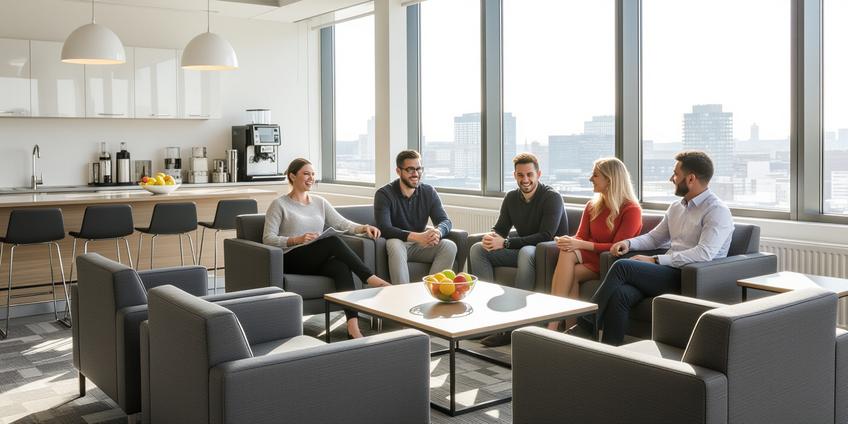
A comfortable break room lets employees unwind and mentally detach from work, which increases happiness, engagement, and overall job satisfaction.
Fostering Community and Sparking Collaboration
When employees from different departments or teams interact informally, it breaks down silos and builds a stronger, more cohesive organization. Social spaces are the engine for this interaction.
- Build Relationships and Trust: These areas act as social hubs where spontaneous conversations occur. These informal encounters are foundational for building a sense of belonging and trust, which are cornerstones of a positive office culture.
- Stimulate Informal Idea Exchange: Relaxed, low-pressure conversations over coffee often lead to unplanned problem-solving and idea sharing. A chat in the break room can quickly turn into an impromptu brainstorming session, making these spaces effective informal meeting areas.
- Flatten Hierarchy and Improve Communication: When managers and executives regularly use these common spaces alongside their teams, it opens communication channels and increases leadership approachability. This visible participation helps flatten perceived hierarchies and makes leaders more accessible.
Practical Design Principles for Effective Spaces
Creating a space that people will actually use requires intentional design. It must be inviting, functional, and supportive of different needs.
- Prioritize Comfort and Appeal: The space must be inviting. This means investing in good seating, appropriate lighting, and maintaining cleanliness. A pleasant aesthetic matters—it signals that the company cares about the environment.
- Provide a Choice of Zones: Not every break serves the same purpose. Design for variety:
- A social/chat area with communal tables.
- A quiet zone with softer seating for reading or solo recharging.
- Flexible nooks that can accommodate a small, impromptu meeting or individual focused work away from the main desk.
- Include Drawcard Amenities: Provide the amenities that naturally draw people in. At a minimum, this includes quality coffee and tea, accessible water, and charging points. Consider adding healthy snacks, board games, or casual activities that encourage interaction.
- Cultivate Permission to Use Them: Design is only half the equation. Leadership must explicitly encourage the use of breaks. Employees should feel permitted, not guilty, for stepping away to recharge. This cultural signal is as important as the physical space.
Checklist for Evaluating or Designing Your Break Space:
- ✓ Does the space feel distinctly separate from the work area?
- ✓ Is there a mix of seating (communal, small group, individual)?
- ✓ Is the lighting warm and natural where possible?
- ✓ Are basic amenities (quality coffee, water, charging) provided and well-maintained?
- ✓ Is there a clear "quiet" area for those needing mental respite?
- ✓ Does leadership model the behavior by using the space themselves?
- ✓ Are company communications supportive of taking regular breaks?
Implementing a Strategy Around Social Spaces
To build a compelling case or policy, structure your approach around three interconnected pillars:
- Well-being & Mental Health: Frame the space as a necessary tool for stress reduction, burnout prevention, and supporting daily mental recovery. Use evidence that breaks improve focus and sustained energy.
- Culture, Community & Collaboration: Position the space as an investment in your company's social capital. Highlight its role in building inter-departmental relationships, fostering trust, and creating opportunities for spontaneous innovation.
- Productivity & Business Outcomes: Connect the dots directly to performance. A rested, socially-connected, and healthy workforce is more engaged, collaborative, and effective. The break room is an enabler of these outcomes.
The quality of your break rooms and social spaces sends a strong signal about your workplace culture. A sparse, unwelcoming area suggests a purely transactional relationship. A thoughtfully designed, vibrant space demonstrates a people-centric culture where employees are valued as whole individuals. This investment pays dividends in morale, retention, and the innovative capacity of your team.
Frequently Asked Questions
Break rooms enable mental recovery through short, regular breaks. This recharge cycle helps employees return to work with improved focus and energy, sustaining higher performance throughout the day.
Prioritize comfort with quality seating and lighting, provide varied zones for socializing and quiet respite, and include drawcard amenities like quality coffee and charging points to encourage use.
Dedicated break areas allow employees to mentally detach from workstations, reducing stress. Features like natural light and plants create a calming environment that helps prevent burnout.
Leaders must model behavior by using the spaces themselves and explicitly encourage breaks. This creates a culture where employees feel permitted to recharge without guilt.
Informal interactions in common areas allow employees from different teams to build relationships and trust. These spontaneous conversations often lead to cross-functional collaboration and idea sharing.
Quality coffee and tea, accessible water dispensers, healthy snack options, and ample charging stations are fundamental. Consider adding board games or casual activities to foster interaction.
Track metrics like employee satisfaction surveys, retention rates, and reports of informal collaboration. Monitor usage patterns and gather feedback on well-being and stress levels.
Thank you!
Thank you for reaching out. Being part of your programs is very valuable to us. We'll reach out to you soon.
References
- Why a great break space is central to creating ...
- How a Break Room Can Improve Culture
- Break Room at Work: 10 Ways It Can Improve Office Culture
- Benefits of a Top-Notch Employee Break Room
- The Importance of Break-out and Social Spaces in the Workplace ...
- Workplace Break Room Trends Report - InReach
- Make your Breakroom an Employee Wellness Zone
- Using Serenity Rooms and Similar Tools to Improve the ...
- 5 workplace amenities that improve staff well-being