Creating Accurate Customer Personas
Learn to create accurate customer personas using data-driven methods. Align marketing, sales, and product teams with precise buyer profiles.
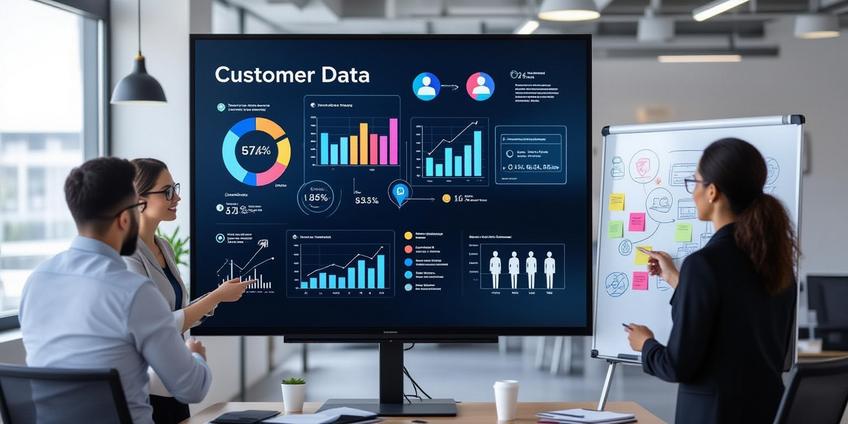
Key Points
- ✓ Define clear purpose and scope to ensure personas serve specific business objectives and avoid scope creep.
- ✓ Combine quantitative analytics with qualitative interviews to build profiles grounded in real customer data and behaviors.
- ✓ Operationalize personas by mapping them to the customer journey and integrating into campaign briefs, sales playbooks, and product roadmaps.
Thank you!
Thank you for reaching out. Being part of your programs is very valuable to us. We'll reach out to you soon.
Developing Precise Buyer Profiles
Accurate buyer profiles, often called customer personas, are foundational tools for aligning marketing, sales, and product development. They move your strategy beyond assumptions to a data-informed understanding of who you serve. A precise buyer profile is a semi‑fictional representation of your ideal customer that synthesizes goals, challenges, and behaviors into a single, actionable guide.
Without this clarity, teams waste resources on generic messaging, build features that miss the mark, and struggle to connect with the people who matter most. The process outlined here is built on a principle from research: accurate customer personas come from real customer data plus structured synthesis, not guesses or internal brainstorming alone.
Define Your Purpose and Scope
Begin by establishing clear boundaries. A profile created without a specific purpose becomes a forgotten document. Before collecting a single data point, answer these questions:
- Primary Objective: Why are you building these profiles? Is it to refine ad targeting, guide product feature development, improve sales conversion, or redesign the user onboarding flow? Your goal dictates the focus of your research.
- Target Segment: Are you profiling users for a specific product line, a new market, or your core customer base? Avoid trying to profile "everyone."
- Primary Users: Which teams will apply these profiles? Marketing needs messaging and channel insights, sales needs objection handling, and product needs use-case clarity. Knowing the audience ensures you include relevant details.
This initial step prevents scope creep and ensures the final profiles are practical tools, not academic exercises.
Gather Quantitative and Qualitative Data
Profiles grounded in reality require evidence from multiple sources. Relying on a single data stream or internal hunts leads to skewed perspectives.
Start with quantitative data to reveal behavioral patterns. Analyze existing systems to identify trends among different customer groups. Key sources include:
- Product Analytics: Identify features used, frequency of use, and common usage paths.
- Web Analytics: Review pages visited, conversion funnels, and geographic or device data.
- CRM Data: Examine deal size, industry, sales cycle length, and recorded win/loss reasons.
- Campaign Data: Note which channels, keywords, and creatives drive the highest-quality conversions.
Use this data to spot initial segments, such as high‑value versus low‑value accounts, or users who adopt quickly versus those who struggle.
Supplement with qualitative data to understand the "why." Numbers show what is happening; conversations explain why. This is where motivations and frustrations become clear.
- Conduct 1:1 customer interviews. This is your most valuable source of insight.
- Review sales call recordings and support ticket notes for recurring themes.
- Analyze open‑ended responses from NPS or customer satisfaction surveys.
- Perform win-loss interviews with both customers and those who chose a competitor.
Aim for 5–10 substantive interviews per hypothesized segment to identify consistent patterns and avoid outliers skewing your profile.
Identify Meaningful Customer Segments
Before crafting a narrative, group your customers into segments based on shared characteristics. A persona should represent a coherent segment with shared needs, goals, and behaviors.
Focus segmentation on factors that influence decision-making more than superficial demographics:
- For B2B: Prioritize job role, primary use case, company size, industry, and their role in the buying process (e.g., budget holder vs. end user).
- For B2C: Consider life stage, core problem severity, spending level, and preferred information channels.
Use your collected data to define 2–5 core segments that are most critical to your business goals. Creating more than this often leads to diluted, unused profiles.
Build the Profile with Actionable Details
Structure each profile template to include fields that directly inform strategy. Every piece of information should help a team member make a better decision.
Identity and Role
- Profile Name & Label: Use a memorable, descriptive title (e.g., "Efficiency-First Operations Manager").
- Firmographic/Demographic Context: Company type, industry, and size (B2B) or life situation (B2C).
- Buying Role: Clearly define if they are the decision-maker, influencer, user, or blocker.
Goals and Challenges
- Primary Goals: What business or personal outcomes are they measured on? (e.g., "Reduce monthly reporting time by 15 hours").
- Pain Points: Detail their operational frustrations, emotional stressors, and current workarounds.
Decision-Making Drivers
- Motivations & Triggers: What event prompts them to seek a solution? (e.g., a failed audit, rapid team growth).
- Key Decision Criteria: What must a solution have? (e.g., specific integrations, proven ROI, 24/7 support).
- Common Objections: What hesitations do they voice, and what evidence would overcome them?
Behavior and Preferences
- Information Sources: How do they research? (e.g., industry peers, LinkedIn groups, specific review sites).
- Buying Process: Outline the typical steps and other people involved in approval.
- Content & Channel Preferences: Where do they spend attention, and what formats do they trust? (e.g., detailed case studies, quick video demos).
Pull direct quotes from your interviews into these sections. Using the customer's own language makes the profile authentic and instantly useful for writing copy or training scripts.
Connect Profiles to the Customer Journey
A static profile is less powerful than one mapped to a dynamic journey. For each primary profile, outline their path:
- Awareness: What trigger event starts their search? Where do they go first?
- Consideration: What alternatives do they evaluate? What proof do they require?
- Decision: Who gives final approval? What are their last-minute concerns?
- Success & Growth: What does effective onboarding look like? What leads them to expand usage or churn?
For each stage, note the specific content or touchpoints your team should provide, such as targeted blog posts for the awareness stage or detailed ROI calculators for the decision stage.
Validate and Integrate Profiles into Operations
A profile is a hypothesis until it improves business outcomes. Validate and iterate systematically.
- Test Messaging: Use A/B tests in campaigns to see if profile-driven messaging improves engagement.
- Solicit Frontline Feedback: Regularly ask sales and support teams if the profiles match the real people they talk to and help in conversations.
- Measure Impact: Check if using profiles improves lead qualification scores, sales conversion rates, or product adoption metrics.
To ensure profiles are used, operationalize them:
- Create a one-page summary for easy reference.
- Embed profiles into campaign briefs, sales playbooks, and product roadmap discussions.
- Train teams on application: "When engaging with Profile X, lead with this goal and address this objection first."
Schedule a review at least annually, or whenever you enter a new market or launch a major product change. If a profile isn't influencing decisions, it needs refinement.
Frequently Asked Questions
Accurate personas move strategy beyond assumptions, ensuring marketing, sales, and product development target the same ideal customer profile. This reduces wasted resources on generic messaging and improves connection with the right audience, driving better business outcomes.
Quantitative data from analytics reveals behavioral patterns like feature usage and conversion paths, showing what customers do. Qualitative data from interviews explains the motivations and frustrations behind those behaviors, providing the 'why' behind the numbers for deeper insight.
Aim for 5-10 substantive interviews per hypothesized segment to identify consistent patterns without allowing outliers to skew the profile. This ensures robust qualitative insights that accurately represent the segment's needs and behaviors.
Segment based on factors influencing decision-making, such as job role and use case for B2B or life stage and problem severity for B2C. Focus on 2-5 core segments critical to business goals to avoid creating diluted, unused profiles.
Include identity/role, goals/challenges, decision-making drivers, and behavior/preferences. Incorporate direct customer quotes to make profiles authentic and useful for copywriting, training scripts, and strategic decision-making across teams.
Test profile-driven messaging through A/B campaigns, solicit feedback from sales and support teams, and measure impact on lead qualification, conversion rates, or product adoption metrics. If a profile isn't influencing decisions, it needs refinement based on real-world validation.
Review personas annually or whenever entering new markets or launching major product changes. This ensures they remain relevant and continue to influence business decisions effectively, adapting to evolving customer needs and market conditions.
Thank you!
Thank you for reaching out. Being part of your programs is very valuable to us. We'll reach out to you soon.
References
- Customer Persona Definition - Glossary
- How to Define Your Target Market and Customer Persona
- What is a Customer Persona? ...or Buyer Persona or ...
- Customer persona definition - What is? - Digital marketing ...
- What is a Customer Persona? Examples of Buyer Personas
- Customer persona
- What Is a Customer Persona? Definition, Uses, and ...
- The Beginner's Guide to Defining Buyer Personas