The Impact of Office Design on Company Culture
Learn how office design shapes company culture. Discover actionable strategies to align workspace with values for better engagement, collaboration, and retention.
Key Points
- ✓ Office design functions as a physical script that guides daily employee behavior, influencing collaboration, focus, and well-being based on layout and amenities.
- ✓ Match design features to cultural archetypes: use open layouts for collaborative cultures, flexible spaces for creative teams, and quiet zones for focused work environments.
- ✓ Implement practical strategies including culture-space audits, modular furniture for adaptability, and tracking metrics to measure design's impact on engagement and retention.
Thank you!
Thank you for reaching out. Being part of your programs is very valuable to us. We'll reach out to you soon.
How Workplace Environments Shape Organizational Values
The physical space where work happens is far more than a container for desks and computers. It is a powerful, non-verbal communicator of what an organization stands for, directly influencing how employees interact, feel, and perform. A thoughtfully crafted environment acts as a tangible expression of your company's core principles, shaping behaviors and reinforcing the cultural identity you wish to cultivate. When design and culture are in sync, the results are measurable: heightened engagement, stronger collaboration, improved retention, and a genuine sense of belonging among team members.
The Direct Connection Between Space and Behavior
Office design functions as a physical script, guiding employee actions and interactions on a daily basis. The layout, furniture choices, and available amenities send clear signals about expected behaviors and cultural priorities.
- Open layouts actively de-emphasize rigid hierarchy and encourage spontaneous communication and teamwork. They are a physical declaration that collaboration is valued over individual status.
- Enclosed offices and fixed workstations support cultures that prioritize stability, formal procedures, and focused, confidential work.
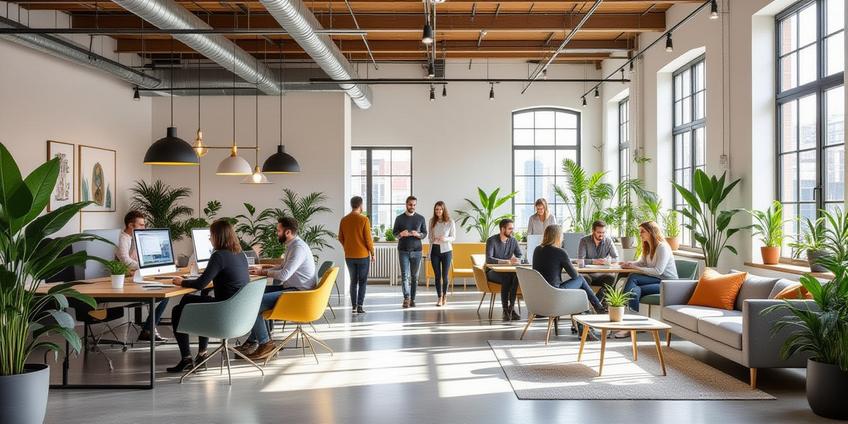
- Flexible, hybrid designs with a variety of settings—from collaborative hubs to quiet focus pods and casual lounge areas—cater to dynamic, creative cultures. They empower employee choice, signaling trust and a value for innovation and adaptability.
This behavioral influence extends to well-being. Features like dedicated breakout spaces, access to natural light, and biophilic design elements (e.g., plants, natural materials) are not mere amenities. They are investments in reducing stress and preventing burnout, directly enhancing psychological well-being and signaling that the company cares for its people as individuals.
Design prompts adjustments in worker interactions—open offices de-emphasize hierarchy and boost communication; formal setups prioritize consistency.
Aligning Design with Your Cultural Archetype
To harness the impact of office design, you must first define the cultural traits you want to promote. Use the following framework to audit your current space or plan a new one.
For a Collaborative or Clan Culture: This culture thrives on teamwork, mentorship, and a sense of family.
- Design Features to Implement:
- Prioritize group areas and project rooms over expansive personal desks.
- Use open floor plans with minimal physical barriers.
- Incorporate ample shared surfaces like whiteboards, digital screens, and communal tables.
- Create casual "collision spaces" near coffee points and printers to foster unplanned conversations.
- Actionable Checklist:
- ✓ Audit the ratio of collaborative square footage to individual workstations. Aim for a balance that favors group work.
- ✓ Ensure every team has access to a dedicated "war room" or project space for intensive collaboration.
- ✓ Remove physical symbols of hierarchy, such as executive-only floors or significantly larger corner offices for leadership.
For a Creative or Adhocracy Culture: This culture values innovation, risk-taking, and agility.
- Design Features to Implement:
- Create open, reconfigurable spaces with movable furniture and partitions.
- Introduce fun, inspiring décor, bold colors, and unconventional artwork.
- Offer a diverse mix of workstations: standing desks, lounge seating, high-top tables, and focus pods.
- Designate "innovation labs" or maker spaces with tools for prototyping and experimentation.
- Actionable Checklist:
- ✓ Implement a "hot-desking" or free-address policy to encourage movement and new connections.
- ✓ Provide writable surfaces on walls and tables to capture spontaneous ideas.
- ✓ Allocate a budget for teams to customize and adapt their immediate workspace quarterly.
For a Focused or Results-Oriented Culture: This culture requires deep concentration, confidentiality, and efficiency.
- Design Features to Implement:
- Ensure ample access to quiet zones, phone booths, and private offices.
- Utilize sound-masking technology and acoustic paneling to minimize auditory distractions.
- Provide high-quality, ergonomic task chairs and desks to support long periods of focused work.
- Design clear zoning to separate quiet areas from collaborative zones.
- Actionable Checklist:
- ✓ Conduct a noise audit to identify and mitigate distraction hotspots.
- ✓ Establish a booking system for private focus rooms to guarantee access when needed.
- ✓ Implement a "do not disturb" visual signal, like a light or flag, at individual workstations.
Practical Strategies for Implementation
Moving from theory to practice requires a structured approach. Follow these steps to ensure your office design effectively supports your company culture.
Conduct a Culture-Space Audit. Gather a cross-functional team. Walk through your office and assess how the current design supports or hinders your stated cultural values. For example, if you value wellness, do you have spaces for relaxation, access to natural light, and healthy food options? If you value transparency, are leaders physically accessible?
Prioritize Employee Choice and Control. Research consistently shows that providing options for where and how to work lowers stress and increases engagement. Don't mandate a single way of working. Instead, create an ecosystem of spaces that support different tasks: heads-down focus, team collaboration, social connection, and rejuvenation.
Embed Your Brand Narrative. Go beyond slapping a logo on the wall. Use design to tell your company's story. Display mission and value statements in high-traffic areas. Use graphics that reflect your heritage or vision. Celebrate employee achievements and client projects as permanent installations. This reinforces identity and builds pride.
Invest in Modularity and Technology. A rigid space will stifle a growing company. Opt for modular furniture, movable walls, and scalable technology infrastructure. This allows your environment to adapt to changing team sizes, work modes, and future needs without a complete overhaul. Ensure seamless integration of video conferencing and digital collaboration tools in every room type.
Measure the Impact. After implementing changes, track relevant metrics. Use employee engagement surveys with specific questions about the workplace. Monitor utilization rates of different spaces with sensors or booking data. Track changes in retention rates and interview candidates about their perception of your space. This data will inform future iterations.
Avoid the pitfall of a one-size-fits-all approach. A design that brilliantly supports a software startup's creative chaos could cripple a law firm's need for confidential focus. The most effective environments are those where every design decision—from the floorplan to the furniture—is a conscious reflection of the unique culture it aims to foster.
Frequently Asked Questions
Office design communicates organizational values non-verbally, shaping how employees interact, feel, and perform. Elements like layout, furniture, and amenities guide behaviors and reinforce cultural identity, impacting engagement and collaboration.
For collaborative cultures, prioritize open floor plans, group areas, shared surfaces like whiteboards, and casual collision spaces. Minimize physical barriers and symbols of hierarchy to encourage spontaneous communication and teamwork.
Assemble a cross-functional team to walk through the space, assessing how design supports or hinders cultural values. Evaluate elements like access to natural light, collaboration zones, and symbols of transparency or hierarchy.
Monitor employee engagement surveys with workplace-specific questions, space utilization rates via sensors or booking data, retention rates, and candidate feedback on office perception to gauge design effectiveness.
Implement a hybrid design with diverse settings: open areas for collaboration alongside quiet zones, phone booths, and focus pods. Use clear zoning, acoustic paneling, and visual 'do not disturb' signals to support both modes.
Avoid one-size-fits-all approaches that mismatch design and culture, neglecting employee choice, and failing to measure impact. Ensure design reflects unique cultural traits rather than generic trends.
Integrate scalable technology like video conferencing in all room types, use sensors to track space utilization, and implement booking systems for focus rooms. Modular tech infrastructure allows adaptation to changing needs.
Thank you!
Thank you for reaching out. Being part of your programs is very valuable to us. We'll reach out to you soon.