Organizing Hybrid Events Successfully
Master hybrid event planning with our expert guide. Create seamless blended experiences for in-person and virtual audiences to boost engagement and achieve goals.
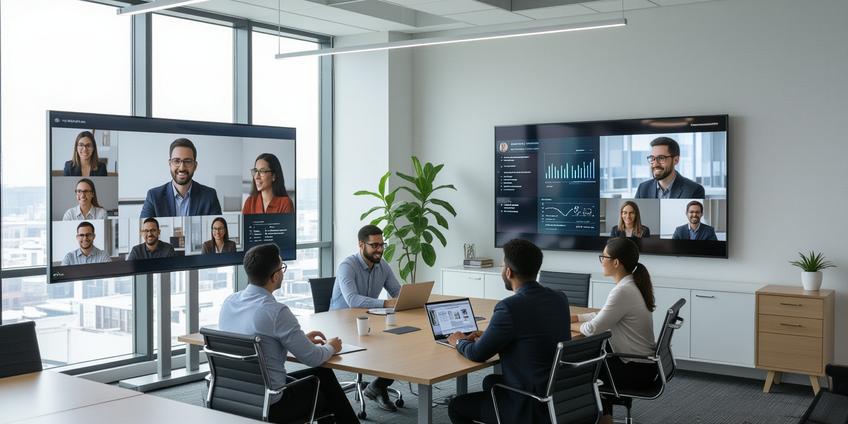
Key Points
- ✓ Define clear objectives and separate KPIs for in-person and virtual attendees to measure success for each audience segment.
- ✓ Select integrated technology platforms and venue partnerships that ensure reliable streaming and unified branding across all touchpoints.
- ✓ Design agendas with parallel engagement strategies and exclusive value for each group to prevent either audience feeling secondary.
Thank you!
Thank you for reaching out. Being part of your programs is very valuable to us. We'll reach out to you soon.
Executing Blended In-Person and Online Gatherings
A blended event is not simply a physical gathering with a camera pointed at it. It is a distinct format that requires its own strategy to serve two distinct audience groups simultaneously. Success hinges on meticulous preparation that creates a unified, yet tailored, experience for everyone involved.
Foundational Planning and Goal Setting
Begin by establishing a clear foundation. Ambiguous goals lead to disjointed experiences. Define what success looks like for your organization and, critically, for each attendee segment.
- Clarify Primary Objectives: Are you aiming to generate leads, educate a community, strengthen member loyalty, or launch a product? Your core business goal dictates every subsequent decision.
- Define Audience-Specific KPIs: Recognize that in-person and virtual attendees have different value propositions. For on-site guests, key performance indicators might include networking connections made or sponsor booth visits. For online participants, focus on digital engagement metrics like poll participation, chat activity, and post-event content views.
- Survey Your Audience: Before finalizing plans, ask potential attendees about their preferences. This can reveal crucial information about preferred session times across time zones, accessibility needs for virtual platforms, or the types of interactive formats they find most valuable.
"You cannot treat your virtual audience as an afterthought. Their experience must be designed with the same intentionality as your in-person event from day one."
Pre-Event Planning Checklist:
- ✓ Document primary business objectives for the hybrid event.
- ✓ List specific KPIs for in-person attendees (e.g., session attendance, networking scans).
- ✓ List specific KPIs for virtual attendees (e.g., live stream watch time, Q&A submissions).
- ✓ Distribute a pre-event survey to gauge time zone and format preferences.
- ✓ Draft a unified event mission statement that includes both audience groups.
Selecting and Integrating Technology
Your technology stack is the backbone of the hybrid experience. It must be reliable, intuitive, and capable of bridging the physical and digital divide.
- Platform Capabilities: Choose a dedicated hybrid or virtual event platform that offers more than just live streaming. Essential features include integrated attendee registration, live polling and Q&A, virtual breakout rooms, networking lounges, and robust analytics. The platform should feel like a destination, not just a video feed.
- Venue and Production Partnership: Your physical venue must have a strong technical infrastructure. Partner with an in-house or external AV team experienced in hybrid broadcasts. They will manage critical elements like professional-grade cameras, audio mixing for both room and online sound, lighting for video, and reliable, high-bandwidth internet with a dedicated connection for the stream.
- Unified User Experience: Ensure branding, agenda, and navigation are consistent across your venue signage, mobile app, and virtual platform. A virtual attendee should feel they are at the same event as the person in the auditorium.
Technology & Venue Selection Checklist:
- ✓ Confirm platform has live streaming, interactive tools (polls, Q&A), and breakout sessions.
- ✓ Verify venue has dedicated, high-speed internet with a backup connection.
- ✓ Assess venue AV team's experience with hybrid production and recording.
- ✓ Test the virtual platform's accessibility features (e.g., closed captioning integration).
- ✓ Ensure branding and agenda are synchronized across all physical and digital touchpoints.
Designing a Cohesive and Engaging Agenda
The agenda is where your planning becomes tangible for attendees. Structure it to facilitate parallel engagement, ensuring neither group feels like a secondary audience.
- Visual Agenda Coding: Clearly mark which sessions are "Live-Streamed," "In-Person Only," or "Virtual Only" on all agendas. This manages expectations and helps attendees plan their day.
- Build in Interaction Points: Schedule interactions specifically for the hybrid format. A speaker can take questions from the room microphone and the virtual moderator. Live polls can include all attendees, with results displayed on the stage screen and within the virtual platform.
- Create Exclusive Value: While core content like keynotes should be shared, consider offering exclusive perks for each group. In-person attendees value facilitated networking breaks and meals. Virtual attendees appreciate on-demand access to session recordings and dedicated online-only breakout discussions.
- Respect Time and Attention: For virtual audiences spanning multiple time zones, consider recording key sessions for on-demand viewing. For everyone, schedule ample breaks; online attendees need to step away from their screens just as much as in-person attendees need to move around.
| In-Person Focus | Virtual Focus | Shared Strategies |
|---|---|---|
| Facilitated networking rounds, coffee breaks, and lunches. | On-demand video libraries, asynchronous chat channels, and virtual whiteboards. | Live, unified Q&A sessions; real-time polls displayed to all; identical core presentation content. |
Building and Coordinating Your Team
A hybrid event requires a unified but specialized production team. Clear roles prevent logistical gaps between the physical and digital worlds.
- Dedicated Roles: Assign a Virtual Event Host or moderator whose sole focus is engaging the online audience, reading digital chat questions, and facilitating virtual activities. Meanwhile, an On-Site Stage Manager coordinates with speakers and the AV team in the venue.
- Unified Command Center: These key team members should be in constant communication, often via a dedicated headset channel, to coordinate transitions, Q&A, and manage timing.
- Comprehensive Training: All staff, from registration helpers to speakers, need basic training. Speakers must know where to look (at the camera for online attendees, at the room for in-person), how to use interactive features, and what to expect. Provide simple one-page guides for them.
- Attendee Tech Support: Have a visible, responsive tech support channel for virtual attendees. This could be a live chat help desk within the platform or a dedicated email address advertised during the event.
The Critical Role of Rehearsals
A full technical rehearsal is non-negotiable. This is your only chance to identify and solve problems before they impact your attendees.
- Schedule a Full Dry Run: Conduct a complete "run of show" 1-2 days before the event at the actual venue. Use stand-in speakers if necessary.
- Test Every Workflow: Practice speaker transitions, slide advances, video roll-ins, and, most importantly, the switching between in-person Q&A and virtual Q&A. Test all microphone and camera feeds.
- Simulate Attendee Experience: Have team members join the virtual platform from off-site to experience the stream as an attendee would, checking audio/video quality and interactive features.
- Create a Run-of-Show Document: This detailed minute-by-minute script should be distributed to every member of the production team, listing every action, transition, and responsible person.
Measuring Impact and Iterating
Post-event analysis tells you what worked and what to improve. Measure against the KPIs you established during the planning phase.
- Gather Quantitative Data: Use your platform's analytics dashboard to measure virtual attendance, engagement rates, poll participation, and content consumption. For in-person events, track registration check-ins, session attendance, and networking activity.
- Collect Qualitative Feedback: Send post-event surveys segmented for in-person and virtual attendees. Ask specific questions about the hybrid experience, the ease of use of the technology, the quality of interaction, and the perceived value.
- Analyze for Future Planning: Compare results against your goals. Did virtual engagement meet expectations? Did in-person attendees feel the hybrid elements were intrusive or enriching? Use these insights to refine your strategy for the next blended event, applying lessons learned to enhance the experience for all participants.
Frequently Asked Questions
Begin by establishing clear primary objectives and defining audience-specific KPIs for both in-person and virtual attendees. Survey your audience to understand their preferences for timing, format, and accessibility needs before finalizing any plans.
You need a dedicated hybrid event platform with live streaming, interactive tools (polls, Q&A, breakout rooms), and analytics. The physical venue must have professional AV capabilities, high-speed dedicated internet, and an experienced production team for seamless broadcasting.
Use visual agenda coding to mark session types, build in hybrid interaction points like unified Q&A, and create exclusive value for each group. Schedule breaks and consider time zones for virtual attendees to maintain engagement.
Assign a dedicated Virtual Event Host to engage online audiences and an On-Site Stage Manager for venue coordination. Ensure both roles communicate via a unified command center and provide training for all staff and speakers.
Rehearsals allow you to test every workflow, identify technical issues, and practice transitions between in-person and virtual elements. They ensure your team is prepared and prevent problems that could impact attendee experience.
Measure against the KPIs you established: use platform analytics for virtual engagement and track in-person metrics. Collect qualitative feedback through post-event surveys segmented by audience type to understand the experience.
Treating virtual attendees as an afterthought. Their experience must be intentionally designed from the start with dedicated resources, interactive features, and value equal to in-person participants.
Thank you!
Thank you for reaching out. Being part of your programs is very valuable to us. We'll reach out to you soon.