Learning Experience Platforms (LXP) vs. LMS
LXP vs LMS: Discover when to use a Learning Management System vs. Learning Experience Platform for your organization's training needs.
Key Points
- ✓ Identify when to use an LMS for compliance tracking and mandatory training versus an LXP for personalized, social learning initiatives.
- ✓ Implement a hybrid approach by using LMS as a system of record and LXP as an engaging front-end layer for comprehensive learning ecosystems.
- ✓ Conduct an internal audit of learning needs and learner preferences before selecting a platform to ensure alignment with organizational goals.
Thank you!
Thank you for reaching out. Being part of your programs is very valuable to us. We'll reach out to you soon.
Comparing Learning Management Systems and Learning Experience Platforms
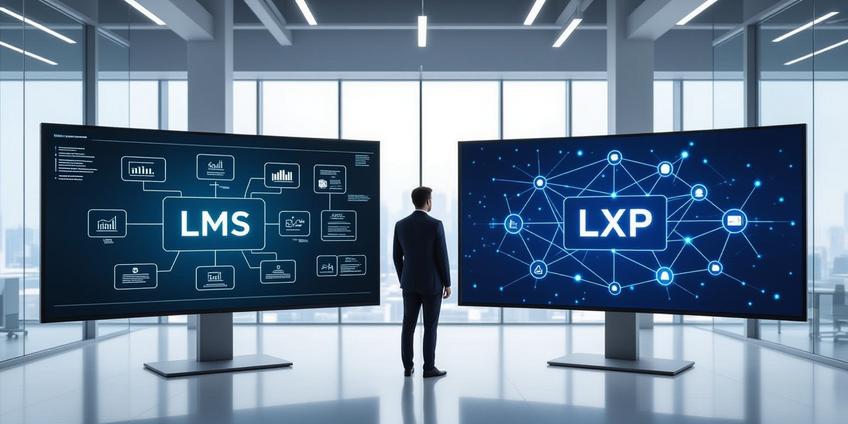
Understanding the distinction between a Learning Management System (LMS) and a Learning Experience Platform (LXP) is essential for building an effective digital learning strategy. An LMS is built to manage and track structured, often mandatory training, while an LXP is built to engage learners with personalized, continuous, and self-directed learning. Choosing the right tool—or combination—depends entirely on your organization's primary goals.
Core Distinctions and Primary Purposes
The fundamental difference can be summarized in one line: an LMS is a “system of record” for training, while an LXP is a “system of engagement” for learning.
- LMS: The Administrator's Tool. Its primary purpose is to administer, deliver, and track formal courses and compliance training. Think of it as the backbone for mandatory learning. Control is top-down; learning and development (L&D) teams or managers assign specific courses to specific groups or individuals. The focus is on completion, certification, and generating reports for auditors or regulators.
- LXP: The Learner's Platform. Its core function is to enable personalized, learner-driven, continuous learning experiences. Control is bottom-up; employees explore, choose, and share content based on their interests and career goals. The platform uses artificial intelligence (AI) to recommend relevant learning, fostering a culture of self-directed growth and knowledge sharing.
An LMS ensures people complete required training. An LXP inspires them to learn more.
Detailed Feature Comparison
To make an informed decision, examine how each platform handles key dimensions of the learning process.
| Dimension | Learning Management System (LMS) | Learning Experience Platform (LXP) |
|---|---|---|
| Learning Approach | Top-down, push. Courses are assigned by admins or managers. | Bottom-up, pull. Learners explore and choose content; AI provides recommendations. |
| Content Model | Closed repository. Primarily hosts internal, structured courses (like SCORM packages). | Open aggregation. Pulls in content from many sources: internal courses, external videos, articles, and user-generated material. |
| Content Control | Centralized. Mostly L&D/admins create and publish content in a "closed system." | Democratized. Often allows subject matter experts and users to publish, share, and curate content. |
| User Experience | Linear, checklist-style. Interface is often functional and admin-centric. | Non-linear, exploratory. Features a modern, consumer-grade (like Netflix or Spotify), learner-centric design. |
| Personalization | Limited. Mainly based on role or group assignments and fixed learning paths. | Strong. Driven by AI/machine learning that recommends content based on individual goals, behavior, and skills profile. |
| Social Learning | Basic. Typically offers simple forums with weak peer-to-peer interaction. | Rich. Integrates social features like content sharing, likes, comments, peer reviews, and community spaces. |
| Analytics Focus | Compliance metrics: completions, pass/fail scores, certification reports. | Engagement metrics: content effectiveness, social interactions, skill development signals, and learning habits. |
Strategic Selection: When to Use Each Platform
Your organization's primary needs should guide your choice. These platforms are not inherently mutually exclusive; they often serve complementary roles.
Choose an LMS if your primary needs are:
- Robust compliance tracking and certification management for regulated industries (e.g., healthcare, finance, manufacturing).
- Delivering standardized, formal learning paths that must be pushed to specific audiences, such as onboarding or safety training.
- Generating detailed, auditable reports for regulatory bodies.
Implementation Checklist for an LMS:
- Identify all mandatory and compliance-driven training requirements.
- Map out standardized learning paths for different roles (e.g., new hire, manager).
- Define the certification and re-certification workflows.
- Establish clear reporting protocols for L&D and compliance officers.
Choose an LXP if your primary needs are:
- Fostering personalized, on-demand learning for upskilling and reskilling initiatives.
- Building a strong social and user-generated learning culture to capture tacit knowledge.
- Creating a single, engaging portal that aggregates diverse content sources (internal LMS courses, LinkedIn Learning, industry blogs, internal wikis).
Implementation Checklist for an LXP:
- Audit and integrate all available internal and external content sources.
- Define skills frameworks or career paths to guide AI recommendations.
- Launch campaigns to encourage subject matter experts to create and share micro-content.
- Promote social features by creating learning communities around key topics or projects.
Integrating LMS and LXP for a Complete Strategy
For many mid-to-large organizations, the most effective approach is to use both systems together. This hybrid model leverages the strengths of each.
In this setup:
- The LMS remains the system of record in the background. It reliably handles all compliance training, certification tracking, and formal course management.
- The LXP sits on top as the front-end experience layer. It becomes the primary interface that employees use daily. The LXP curates and recommends content from the LMS and all other aggregated sources, creating a seamless bridge between formal and informal learning.
Scenario: Manufacturing Company
- LMS Use: Tracks mandatory safety compliance courses for factory floor workers. Managers run reports to ensure 100% completion before audits.
- LXP Use: Engineers use the platform to explore the latest trends in automation. The AI recommends a formal LMS course on robotics and a recent webinar from an industry expert. An engineer shares a quick video tip on machine maintenance, which gets peer-reviewed and added to the platform's knowledge base.
This integration ensures that mandatory learning is not neglected while actively promoting a culture of continuous, engaging development. The LXP effectively "wraps" the formal LMS content in a more appealing and personalized environment, increasing overall learning engagement.
Actionable Steps for Evaluation
Before selecting a platform, conduct an internal assessment.
- Audit Your Learning Needs. Categorize your current and future learning content: What percentage is mandatory/compliance vs. voluntary/developmental?
- Analyze Your Learners. Survey employees to understand their preferences. Do they need structured paths, or do they crave exploration and social learning?
- Review Your Tech Stack. Can a new platform integrate with your HRIS, content libraries, and collaboration tools (like Microsoft Teams or Slack)?
- Start with a Pilot. If considering an LXP, start with a pilot group. Seed it with content, encourage key influencers to share, and measure engagement metrics against a control group.
- Plan for Governance. Especially for an LXP, establish light-touch guidelines for user-generated content to maintain quality without stifling contribution.
The goal is not to find a single "best" platform, but to architect a learning ecosystem that efficiently manages essential training while powerfully engaging every employee in their professional growth. By understanding the distinct roles of the LMS and LXP, you can build this ecosystem strategically.
Frequently Asked Questions
An LMS is a 'system of record' designed to manage and track structured, mandatory training with top-down control. An LXP is a 'system of engagement' focused on personalized, learner-driven experiences with AI recommendations and social learning features.
Choose an LMS when your primary needs include robust compliance tracking, certification management for regulated industries, delivering standardized formal learning paths, and generating auditable reports for regulatory bodies.
Yes, many organizations integrate both systems, using the LMS as a backend system of record for compliance training and the LXP as a front-end experience layer that aggregates and recommends content from multiple sources including the LMS.
LXP platforms use AI and machine learning to recommend content based on individual goals, behavior patterns, skills profiles, and career interests, creating a tailored, Netflix-like learning experience.
For LMS, focus on compliance metrics like completion rates, pass/fail scores, and certification reports. For LXP, track engagement metrics such as content effectiveness, social interactions, skill development signals, and learning habits.
Start by auditing your learning needs to categorize mandatory vs. developmental content, analyze learner preferences through surveys, review existing tech stack for integration capabilities, and consider running a pilot program for an LXP.
Establish light-touch governance guidelines, launch campaigns to motivate subject matter experts to create micro-content, promote social features like sharing and peer reviews, and create learning communities around key topics.
Thank you!
Thank you for reaching out. Being part of your programs is very valuable to us. We'll reach out to you soon.
References
- LMS vs. LXP vs. TXP
- LMS vs LXP: What's the Difference? Pros & Cons
- What is a Learning Experience Platform (LXP) - LXP vs LMS
- LMS, LXP, or LLP: Differences Between the Learning ...
- LXP vs LMS: Which Do You Need For Your Organisation?
- LXP vs. LMS: which platform to choose in 2025?
- LXP vs. LMS: What are the differences?
- LMS vs LXP: Which One is Right for Your Business
- LMS vs LXP: understanding key differences and how to ...