VR Training for Health and Safety
Discover how VR training for health and safety reduces training time by 92% while improving procedural correctness by 68%. Implement risk-free immersive simulations.
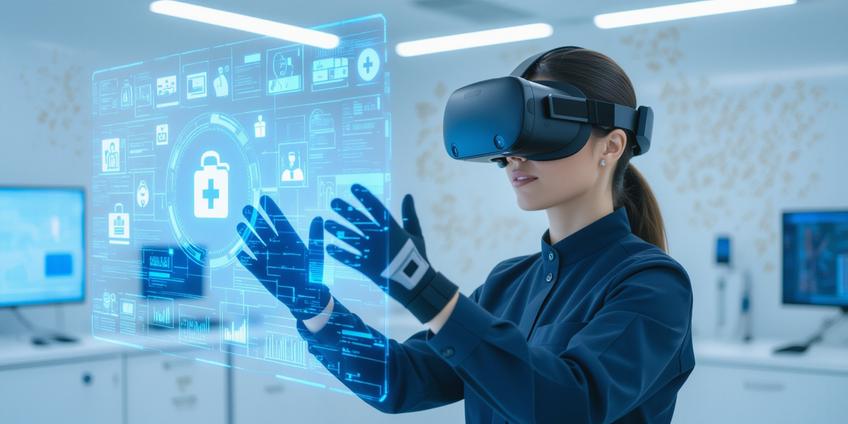
Key Points
- ✓ Reduce training time by 92% and lower costs by transitioning from lengthy on-site sessions to on-demand VR modules that require only 20 minutes.
- ✓ Improve procedural correctness by 68% through immersive simulations that enhance long-term memory transfer and practical skill application.
- ✓ Enable unlimited risk-free practice of dangerous procedures like lockout/tagout and emergency evacuations with real-time feedback and analytics.
Thank you!
Thank you for reaching out. Being part of your programs is very valuable to us. We'll reach out to you soon.
Immersive Simulation for Workplace Safety and Wellbeing
Virtual reality training for health and safety uses immersive, risk-free digital environments to simulate high-risk scenarios. This method has demonstrated superior results in knowledge retention, practical performance, and regulatory compliance when compared to traditional approaches like instructional videos or physical on-site sessions.
Core Advantages of Immersive Safety Training
Adopting VR training for health and safety offers measurable benefits that directly impact operational efficiency, employee competence, and organizational safety culture.
- Substantial Time and Cost Reduction: Transitioning from lengthy, resource-intensive sessions to on-demand modules creates significant efficiencies. For instance, a training program that required four hours of on-site instruction can be completed in approximately 20 minutes using a virtual reality platform. This represents a 92% reduction in time, while also saving on costs associated with dedicated trainers, physical equipment setups, and facility usage.
- Documented Performance Improvement: Trainees demonstrate markedly better skill application after immersive simulation. Research indicates that individuals complete 68% more procedural steps correctly following VR training versus traditional in-person methods. This approach enhances long-term memory transfer and promotes lasting behavioral change by engaging users in active, experiential learning.
- Unmatched Safety and Accessibility: This method allows for unlimited, repeated practice of dangerous procedures—from electrical lockout/tagout to emergency evacuations—with absolutely zero real-world risk. Training modules are available anytime, anywhere, ensuring consistent messaging and skill development across all sites and shifts, which is foundational for a robust safety culture.
- Data-Driven Insights and Accountability: Unlike passive learning, immersive systems provide real-time feedback to users and generate detailed analytics for managers. You can track individual and group performance metrics, such as reaction times, procedural accuracy, and hazard identification rates, enabling targeted coaching and verifiable compliance reporting.
Strategic Implementation Across Key Risk Areas
VR training for health and safety is versatile and applies to numerous occupational health, safety, and environment (EHS) contexts within industries like manufacturing, construction, energy, and laboratories.
Hazard Identification and Mitigation
The first line of defense is recognizing danger. Immersive simulations excel at creating realistic environments for practicing this critical skill.
- Conduct virtual walkthroughs of a factory floor or construction site to identify unmarked hazards, improper material storage, or slip/trip risks.
- Practice fall prevention protocols, including the correct inspection and use of personal fall arrest systems (PFAS) from the safety of an office.
- Run scenarios focused on remediating common hazards before they lead to incidents.
Equipment Operation and Standard Procedures
Mastery of safe procedures is non-negotiable. VR provides a hands-on rehearsal space for complex or infrequently performed tasks.
- Lockout/Tagout (LOTO): Practice the full sequence of isolating energy sources in a detailed, interactive virtual plant, including applying locks and verifying a zero-energy state.
- Forklift Operation: Navigate a virtual warehouse, practicing load handling, pedestrian awareness, and stability principles without the cost or risk of a physical machine.
- Ergonomic Lifting: Perform virtual lifts where the system tracks your posture, grip, and lift path, providing instant feedback on technique to prevent musculoskeletal injuries.
- Confined Space Entry: Simulate the entire process—from permit review and atmospheric testing to entry, work, and exit—within a high-fidelity virtual confined space.
Emergency Response and Crisis Management
Preparing for high-stress, low-frequency events is a perfect use case for immersive repetition.
- Execute full fire evacuation drills from a specific workstation, locating exits and avoiding virtual hazards.
- Operate a virtual fire extinguisher using the correct P.A.S.S. technique (Pull, Aim, Squeeze, Sweep) on different fire types.
- Respond to simulated natural disasters, chemical spills, or lab accidents, making critical decisions under pressure.
Specialized High-Risk Operations
For tasks where real-world training is exceptionally dangerous or expensive, VR offers a viable, effective alternative.
- Safe operation of heavy machinery and commercial vehicles.
- Chemical handling, dilution, and spill response procedures.
- Working on or near high-voltage electrical systems.
Building an Effective Program: A Practical Checklist
Moving from understanding to implementation requires a structured approach. Follow these actionable steps to deploy VR training for health and safety successfully.
Phase 1: Assessment and Planning
- ✓ Conduct a Risk Audit: Identify the 3-5 highest-risk procedures or most common incident types in your organization that would benefit most from immersive rehearsal.
- ✓ Define Clear Learning Objectives: For each module, specify the exact skills or knowledge employees must demonstrate, such as "Correctly perform a 6-step LOTO procedure on Pump A-12."
- ✓ Evaluate Technology Needs: Determine if you will use standalone VR headsets, PC-connected systems, or a mobile-based solution. Consider hardware logistics, hygiene, and IT support.
- ✓ Select a Content Partner: Choose a provider (e.g., iQ3Connect, Immersive Factory) based on their ability to customize scenarios to your specific environment and equipment, not just offer generic content.
Phase 2: Pilot and Integration
- ✓ Run a Focused Pilot: Launch with a small, diverse group (e.g., new hires and experienced workers). Gather feedback on usability, realism, and perceived value.
- ✓ Measure Pilot Performance: Use the platform's analytics to compare the pilot group's performance against your defined objectives and, if possible, against traditionally trained cohorts.
- ✓ Integrate with Existing Systems: Embed the VR modules into your current Learning Management System (LMS) and overall safety onboarding curriculum. It should complement, not completely replace, necessary hands-on verification.
- ✓ Train Your Facilitators: Ensure safety managers and trainers are proficient in operating the hardware, facilitating sessions, and interpreting the performance data reports.
Phase 3: Scaling and Optimization
- ✓ Establish a Regular Schedule: Mandate periodic refresher training in VR, especially for emergency procedures or high-risk tasks performed infrequently.
- ✓ Promote a Blended Learning Model: Use VR for high-engagement skill practice, supported by manuals for theory and supervised real-world application for final certification.
- ✓ Review Analytics for Continuous Improvement: Regularly assess aggregate data to identify common procedural errors or knowledge gaps across your workforce, and use these insights to refine both the VR scenarios and your broader safety program.
Providers in this space consistently report that immersive training fosters proactive risk identification, reduces incident rates, and provides a scalable, auditable trail for compliance. Its strength lies in cognitive learning for hazardous tasks, making it particularly valuable for organizations with extensive or complex EHS requirements.
The evidence supports a shift towards this interactive method. By providing scalable, consistent, and measurable practice for remote and onsite teams alike—with instant feedback in a consequence-free setting—it represents a practical evolution in how safety competence is built and sustained.
Frequently Asked Questions
VR training demonstrates superior results with 68% more procedural steps completed correctly and 92% reduction in training time compared to traditional in-person sessions. It provides active, experiential learning in risk-free environments that improves long-term retention.
VR training reduces costs associated with dedicated trainers, physical equipment setups, and facility usage. The 92% time reduction translates to significant operational efficiencies, while on-demand modules eliminate scheduling conflicts and travel expenses.
VR can simulate lockout/tagout (LOTO) sequences, forklift operation, confined space entry, emergency evacuations, fire extinguisher use, chemical spill response, and working with high-voltage systems. These simulations allow unlimited practice with zero real-world risk.
VR platforms provide detailed analytics including individual and group performance metrics like reaction times, procedural accuracy, and hazard identification rates. These data-driven insights enable targeted coaching and verifiable compliance reporting.
Implementation requires VR headsets (standalone or PC-connected), content modules, and possibly a learning management system (LMS) for integration. Organizations should evaluate hardware logistics, hygiene protocols, and IT support during planning.
Yes, effective programs require customization to your specific equipment and procedures. Partner with providers who can tailor scenarios to your actual factory floors, machinery, and safety protocols rather than using generic content.
VR should complement existing training through a blended model: use VR for high-engagement skill practice, manuals for theory, and supervised real-world application for certification. Integrate modules into your LMS and schedule regular refresher training.
Thank you!
Thank you for reaching out. Being part of your programs is very valuable to us. We'll reach out to you soon.